Articles in the Attractions Category
Attractions, Churches, Hermitages, Monasteries, Tourism Promotion »
Neamţ Monastery
In the commune Vânători-Neamţ, 15 km north-west from Târgu-Neamţ, the visitors may find the oldest and most important monastic establishment in Moldova. Over the centuries, its founding fathers were the voivodes Petru I Muşat (1375-1391), Alexandru cel Bun (1400-1432), and Ştefan cel Mare (1457-1504), the last having commissioned here the most beautiful of the churches built during his reign, when visitors can admire the miracle-making Virgin Mary icon, painted in 665 in Israel [???].
Within the large and strongly fortified precinct of the monastery, there are two churches (The Ascension …
Attractions, Fortresses, Tourism Promotion »
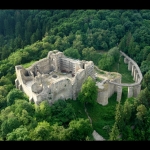
Neamţ Fortress
A watchtower over River Neamţ valley, built under the rule of Petru I Muşat, the voivode whose main interest was to resist the Ottoman invasions. During the first stage of the fortress, a central fort was built protected by 12m-high and 2-3m-thickwalls. There was also a fountain in the centre of the premises. Later on, Stephen the Great extended and consolidated the entire fortification by adding a new belt of walls and four semi-circular defence tours. He also commissioned the increase of the wall height, the defence moat, the …
Attractions, Museums, Tourism Promotion »
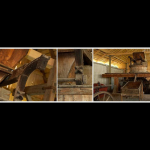
The beginnings of the museum date back to 1940, when the first exhibition organised displayed artefacts unearthed during the archaeological research at Neamţ Fortress. The museum itself was set up in 1957, within the ceremonies celebrating 500 years from the ascent of Ştefan cel Mare to the Moldavian throne. The current venue, housing the museum since 1978, is the building where the well-known Princely School (built in 1853) was opened. Among others, Ion Creangă and the future-to-be great philosopher Vasile Conta, born in Grumăzeşti, close to Humuleşti, went to this …
Attractions, Nature Parks, Tourism Promotion »

The Silver Forest
On the route to Văratec, close to the holy site, in a charming natural environment, on the right side of the road, travellers set their eyes on the The Silver Forest – a protected forestry and landscape reserve since 1972. Covering some 2.5 hectares, the forest belongs to the Vânători-Neamţ Natural Park. Passing by, travellers cannot help remembering Eminescu’s well-known poem dedicated to the forest, mainly birches, some of which around one hundred years old.
The Brass Woods
Between the Agapia and Văratec convents, on Filiorul hill, at a height …
Attractions, Tourism Promotion »

Ion Creangă
Memorial Museum
The museum, organised in 1951, is located in the village of Humuleşti, where the brilliant storyteller, who humbly described himself as a “lump of dust,” came to this world on 1 March 1837. The house where the great writer was born and spent his childhood had been rebuilt in 1830, by his paternal grandfather (Petrea Ciubotariul), is now an authentic evidence of folk architecture.
The museum illustrates a comprehensive universe of mid-nineteenth century rural life universe – along with the many artefacts and household tools – the picturesque flavour …
Attractions, Tourism Promotion »

Veronica Micle
Memorial House
The house, located at the old heart of the town of Târgu-Neamţ, was built in wood and brick by the Neamţ Monastery in 1834, in the most authentic Romanian style, intended to be a school or a hostel. The house was bought in 1850 by the poet’s mother, a recent refugee from Transylvania (the Năsăud area) due to the Hungarian authorities’ persecution. The house – with three rooms viewing on the street, a basement, stables, a well, and an orchard – was given to Veronica as dowry …