Articles in the Attractions Category
Attractions, Monasteries, Museums »
Neamt Monastery, the oldest monastery from Neamt County, hosts a very important religious collection both for the religious culture and art as well for the national culture.
The museum displays cult objects made out of precious metal, embroideries, fabrics, wood sculptures all made by the monks from the monastery or that were received as gifts over time from different rules. All these objects contain important historical information about our past and our traditions.
Because of its wealth, Neamt Monastery was a target of many attacks. Despite the odds, the monastery survived and …
Attractions, Monasteries »
Agapia Monastery is embellished for eternity by the saints painted by Nicolae Grigorescu between 1858 and 1861. He was hired to do this job by Tavefta Ursache, the abbot of Agapia Monastery. She saw an icon of St Mary painted by Nicolae Grigorescu, that we can see today in the museum of the monastery and she was convinced by his talent.
Although he was just 20 years old when he started to paint the interior of Agapia’s church, Nicolae Grigorescu manages to create an immortal piece of art, which successfully combines …
Attractions, Monasteries »
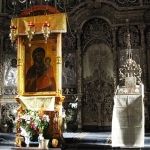
The most important icon from Secu Monastery is the Icon of St Mary, Mother of Jesus from the main church of the monastery. This icon was a gift from ruler Vasile Lupu in 1647 as a sign of respect to Mitropolitul Varlaam (Mitropolit is a high religious position). The icon suffered many modifications and restorations over time and can be found in the main church from Secu Monastery.
The icon was brought from Cyprus Island and is known as the Cypriot Icon. Between 1647 and 1718 the icon could be found …
Attractions, Entertainment »

For the last years, Tineretului Swimming-pool Complex from Piatra Neamt is the ideal place for fun and entertainment during summer for people from Moldavia region in Romania. Because of its modern look and equipment the swimming-pool complex offers numerous possibilities to spend the time and to relax on a hot day. Each summer, during the summer holiday, the swimming pool complex is visited by many people that want to get a perfect ten or take a bath in a modern swimming pool.
The Swimming-pool Complex from Piatra Neamt has two pools: …
Attractions, Entertainment, Events »

Neamt County Council re-opened Negulesti Balneal Resort on June 19, 2010. At the event were present representatives of the local authorities, private investors and a synod of priests. A special religious service was organized to mark the opening of the resort.
Negulesti Balneal Resort is located in Piatra Soimului commune, at approximately 25 km of Piatra Neamt and was taken by Neamt Turism Company that was founded by Neamt County Council and Piatra Soimului Town Hall. Lately Neamt County Council and the local authorities from Piatra Soimului invested in the rehabilitation …
Attractions, Entertainment, Hiking Routes, Nature Parks »
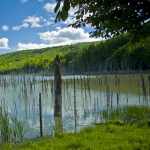
Cuejdel Lake is the biggest natural dam lake of Romania and it’s located in Garcina commune, Neamt County. Although it’s not that well known as “Lacul Rosu” Lake (The Red Lake), Cuejdel Lake is truly spectacular to visit.
To reach Cuejdel Lake there are two access ways: either by car to the lake or by car to a certain point and then on foot. If you want to reach Cuejdel Lake by car you go from Piatra Neamt to Targu Neamt and you make a left at Cracaoani commune on a …