Articles in the Monasteries Category
Attractions, Monasteries »
Agheazmatar represents the place where priests make Holy Water. This building is located at Neamt Monastery outside the walls, in front of the bell tower. It’s worth talking about this building because of the interesting architectural shape and impressive proportions. This building was created between 1836 and 1847 and it’s called Agheazmatar.
The building has a height of 30 meters and a unique shape of the roof in the form of an Orthodox religious head-cover (we call it “mitra”). At the interior, in the middle of the construction, there is a …
Attractions, Monasteries, Museums »
Neamt Monastery, the oldest monastery from Neamt County, hosts a very important religious collection both for the religious culture and art as well for the national culture.
The museum displays cult objects made out of precious metal, embroideries, fabrics, wood sculptures all made by the monks from the monastery or that were received as gifts over time from different rules. All these objects contain important historical information about our past and our traditions.
Because of its wealth, Neamt Monastery was a target of many attacks. Despite the odds, the monastery survived and …
Attractions, Monasteries »
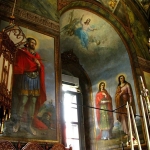
Agapia Monastery is embellished for eternity by the saints painted by Nicolae Grigorescu between 1858 and 1861. He was hired to do this job by Tavefta Ursache, the abbot of Agapia Monastery. She saw an icon of St Mary painted by Nicolae Grigorescu, that we can see today in the museum of the monastery and she was convinced by his talent.
Although he was just 20 years old when he started to paint the interior of Agapia’s church, Nicolae Grigorescu manages to create an immortal piece of art, which successfully combines …
Attractions, Monasteries »
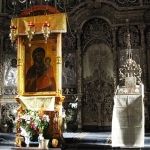
The most important icon from Secu Monastery is the Icon of St Mary, Mother of Jesus from the main church of the monastery. This icon was a gift from ruler Vasile Lupu in 1647 as a sign of respect to Mitropolitul Varlaam (Mitropolit is a high religious position). The icon suffered many modifications and restorations over time and can be found in the main church from Secu Monastery.
The icon was brought from Cyprus Island and is known as the Cypriot Icon. Between 1647 and 1718 the icon could be found …
Attractions, Monasteries, Museums, Neamţ County Pilgrimages, Other Articles, Tourism Promotion, Tourist trails »
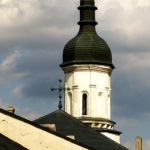
Secu Monastery was built in the beginning of the XVII century and represents an important religious center from Neamt County that hosts a valuable collection of religious objects such as: manuscripts, religious clothing, printings and so on.
The collection of religious objects from Secu Monastery was also appreciated by historian Nicolae Iorga that describes it like “the great wonder of Secu”. Here are some of the valuable objects displayed in the monastery’s museum:
“The Air” (“The holy Epitaph”) that was a gift received by the monastery in 1608. On the red velvet …
Attractions, Churches, Hermitages, Monasteries, Neamţ County Pilgrimages, Other Articles, Tourism Promotion, Tourist trails »
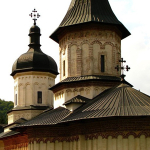
Here, in Neamt County you can visit some of the oldest monasteries from Romania. We also have the highest number of religious settlements from the country. The high number of monks that lived over time in the mountains from Neamt County is reflected in the high density of religious settlements. The monasteries from Neamt County reflect the religious life from these places but also represent a glimpse of pure Romanian history.
You can start with the oldest monastery from Neamt County, Neamt Monastery, built in XIV century by Musatin family. Continue …